How Hostessing Companies Stand Out in 2026: The Tech Edge Clients Now Expect
The hostessing market has a positioning problem: everyone sounds the same. Open any agency's page and you'll read the same three words — professional, elegant, reliable. When every competitor makes an identical promise, clients can't tell you apart, so they default to the cheapest quote. That's a losing game.
The agencies winning the biggest, most prestigious weddings in 2026 broke out of that trap the same way. They stopped competing on adjectives and started competing on how they run the floor — and the floor now runs on live technology.
Here's what that edge looks like, why it wins contracts, and how to build it without hiring a single engineer.
Why "great staff" is no longer a differentiator
Being professional and elegant is the price of entry now, not an advantage. Clients assume it. What they can't assume — and what genuinely worries them about a large wedding — is the operational reality:
- The first 30 to 60 minutes, when every guest arrives at once and the entrance jams.
- The seating chart, and whether 500 people can actually find their tables without a scrum around a printed board.
- The inevitable last-minute change — the VIP who brings three extra guests an hour before dinner.
An agency that can look a client in the eye and say "here is exactly how we handle each of those" is playing a completely different game from one that just promises nice staff. Specifics beat adjectives every time.
The three capabilities that now define a premium agency
1. A live floor plan every hostess shares
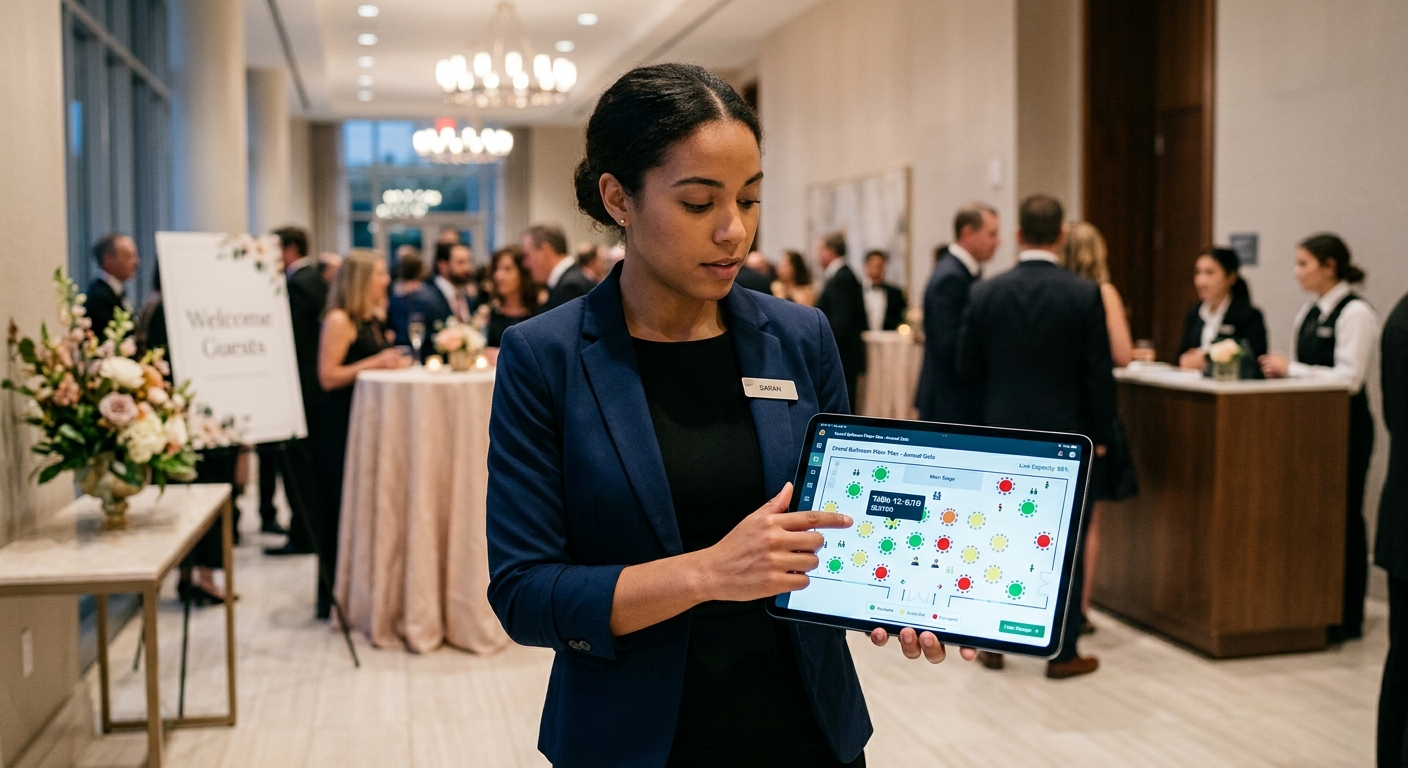
Paper charts are the root of most floor chaos. When your entire team works from one live floor plan on their phones, any hostess can answer any guest anywhere in the venue — and a change made by one person is visible to everyone in a second. This is the single biggest jump in perceived professionalism a hostessing company can make.
2. QR self-seating for guests
The fastest queue is the one that never forms. Let guests scan a QR seat finder and be guided to their own table, and a large share of the arrival-rush traffic routes around your staff entirely. Guests already expect to scan-and-go everywhere else in life; offering it at a wedding signals that your agency operates at the level of the best venues in the world.
3. Instant, invisible re-seating
Last-minute table changes are not an edge case — they happen at virtually every large event. The agencies that shine are the ones where a change is a single tap on a live floor plan that updates for the whole team at once, instead of a whispered scramble and a reprinted board. Owning the last-minute change is arguably the most impressive thing a hostessing team can do, because clients expect it to cause stress and are amazed when it doesn't.
You don't have to build any of this
Here's the part that surprises many agency owners: offering this doesn't mean becoming a software company. Building event tech is slow, expensive, and completely outside your core business. Instead, you plug into a platform that already provides the live floor planning, the QR seat finder, and the hostess check-in console — and you offer it as your premium, tech-backed service.
That's the model that lets a hostessing company leap from "one of many" to "the team venues recommend by name," without engineering a thing. Your product is still the human welcome. The technology just removes everything that used to make big nights chaotic, so your staff can do what they're actually there for.
The takeaway
In 2026, the hostessing companies that grow are the ones that can show a client how the hardest moments of their event will be handled — the arrival surge, the seating, the last-minute change. Adjectives are free and everyone uses them. A live, demonstrable operating system for the floor is the edge that actually wins the booking.
See exactly how Cedar Invites equips hostessing companies to run big-scale events and last-minute changes without a ripple — Cedar Invites for hostessing companies.